Latest News

National Cleanup Campaign postponed due to threat of Tropical Storm Matthew

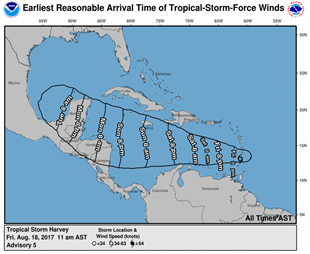
The next phase of the National Cleanup Campaign has been postponed until further notice, in view of the potential threat of Tropical Storm Matthew to Jamaica.

Minister of Local Government and Community Development, Hon. Desmond McKenzie, whose Ministry is spearheading the Campaign, noted that all partners in the Campaign have been advised of the latest developments.

“We recently completed a successful exercise in Hanover, and people have responded positively to the sensitization meetings, and also to the call to bring out their bulky waste for collection. The next phase is to be implemented in Trelawny, and our preparations are well advanced, so I am satisfied that our momentum should not be unduly dented by the potential threat of this Tropical Storm.”

In noting that the Government has activated all emergency mechanisms in the event of the weather system coming to Jamaica, Minister McKenzie also urged communities across the country to take preventive measures.

“We have appealed for a greater effort at cleanliness in private and public spaces, to fight against the Zika virus among other things. However, keeping spaces, including all our gullies and other waterways free from garbage and solid waste, is also an effective defensive mechanism against the higher levels of storm water that normally accompany any weather system of this nature.”

The Local Government Minister also gave the assurance that the Ministry, the Office of Disaster Preparedness and Emergency Management (ODPEM) and the Local Authorities are continuing to make appropriate arrangements for the possibility of the storm reaching Jamaica.

MAJOR GOVERNANCE CHANGES COMING FOR LOCAL AUTHORITIES

Minister of Local Government and Community Development, Hon. Desmond McKenzie, has given the assurance that Local Authorities will be strengthened, and not shut down, as has been suggested by some public commentators recently. In contributing to the Sectoral Debate 2016/2017, the Minister said while this is the case, the Ministry will be taking strong measures to restore discipline to the administration of affairs by the Local Authorities, following the revelations in the Special Reports of the Contractor-General, which were tabled in Parliament. “The public is aware of the actions I have taken in relation to the Hanover Parish Council. They are a clear signal…that this Administration, and this Minister, will not stand aside and allow breaches of the public trust to occur, under the banner of “autonomy”. The Local Authorities are accountable to the Minister under law, and I intend to lift the standard of accountability and of service that they are to provide.” The Minister announced that all Local Authorities will be audited, to ensure that appropriate systems are implemented to make them significantly more efficient and accountable. He also stated that a number of mechanisms will be introduced to ensure and preserve better management at the local level. “We have established a Land Divestment Committee, which is responsible for ensuring that the sale or leasing of lands held by the Local Authorities, is conducted in full compliance with existing policies, laws and regulations. We will in short order, be establishing Audit Committees in the Local Authorities, and we will also begin the process of developing Standard Operating Procedures to ensure seamlessness and accountability in the management of their public responsibilities. At the same time, we will be improving institutional capacity in the Local Authorities, by introducing training in Risk-based Auditing. The curriculum has already been developed and beginning this August, the Auditors in the Local Authorities will experience training on a regional basis. This will also facilitate the more robust system of Quarterly Reporting that will be required of the Local Authorities as of this August.” The portfolio Minister made it clear that failure to adhere to existing laws, policies and guidelines will have practical penalties for the Local Authorities. “We …are tying the payment of monies to the Local Authorities, to their strict compliance. In other words, if the laws or rules are broken, a Local Authority will not receive funding.” In stating that there are serious challenges to be overcome in the Local Authorities, Mr. McKenzie revealed that he will be inviting representatives of the political and administrative functionaries to discuss and resolve the issues. “I am publicly inviting the General Secretary of the Jamaica Association of Local Government Officers (JALGO), Mrs. Helene Davis-Whyte, and the President of the Association of Local Government Authorities of Jamaica (ALGAJ) Councillor Scean Barnswell, to meet with the Ministry’s team and myself to discuss the issues, and to resolve them in a spirit of partnership. I will also be seeking audience with the Contractor-General in this regard. Local Government needs good systems, and good people giving good service throughout those systems, to satisfy public needs and raise its public image.”

MAJOR CHANGES COMING FOR LOCAL AUTHORITIES (1)

Message of Monique Barbut Executive Secretary, UNCCD for World Day to Combat Desertification

Protect Earth. Restore Land. Engage People.

Nearly Half Of The Global Population Was Living Below The Poverty Line In 1980. By 2012 That Number Was Down To About 13%. This means more of us today have the freedom to choose how we live: what we eat or drink, how we spend our time and, even, how we earn our incomes. But ours might be the last generation with such a sizeable global population enjoying these freedoms. Why?

The freedoms we enjoy are made possible by the wide array of land resources we draw on to develop, such as fertile soils, fresh water or the plant and animal life in grasslands and forests. But this freedom to choose has come at a very high price: the degradation of more than 2 billion hectares of all the productive land available to humankind. Today, for every three hectares of land that was productive to start with, one hectare is virtually unusable.

Our inclination to degrade new land instead of fixing and re-using the land that is already degraded means future generations cannot benefit from the same resources. What’s more, the greenhouse gases we emit through our choices are changing the weather patterns so dramatically, they are hastening the destruction of the remaining land resources. Droughts, flashfloods, rainy and hot seasons that are unpredictable, more intense, frequent and widespread are stripping the land bare of its resources faster than ever before.

The rights we claim to enjoy these land resources come with a heavy moral obligation to manage them well. More so, as we may be, literally, the last generation that can significantly slow down the accelerated loss of the land resources left. This generation – our generation – has the time, human, knowledge and financial means to reverse these trends, and restore a vast amount of the degraded lands. But we must work together.

Will we rise to the occasion?

Last year, 193 countries pledged to strive to become land degradation neutral by 2030. It means that you and I made the commitment to maintain the amount of productive land available within our borders during the next 15 years and beyond, or better still, to increase it. If one hectare of land is degraded, we would strive to restore back to health an equal amount of some degraded land.

Ninety countries have already signed up to the challenge and are setting their national targets. This is admirable. But it is not enough when at least 169 countries are affected by land degradation or drought, and all countries are indirectly impacted by them. Actions to avoid, halt and reverse land degradation must begin now with everyone fully engaged. The prospect of a land degradation neutral world grows dimmer if we procrastinate. But it shines brighter each time a person or country joins the campaign to restore degraded land or the battle against the degradation of new land.

Land degradation neutrality should be a top policy goal for every nation that values freedom and choice. Conserving land and restoring that which is degraded back to health is not a benefit that only flows to the billions of people who eke out a living directly from the land. It is a vote to safeguard our own freedoms of choice, and those of our children. It is also a moral standard against which we may well be judged by history.

2016_World Day Message_Monique Barbut


The Secretary-General Message on World Day To Combat Desertification And Drought M

“Protect Earth. Restore land. Engage people”

Desertification, land degradation, drought and climate change are interconnected.  As a result of land degradation and climate change, the severity and frequency of droughts have been increasing, along with floods and extreme temperatures.  More than 50 per cent of agricultural land is moderately or severely degraded, with 12 million hectares lost to production each year.

The livelihoods and well-being of hundreds of millions of people are at stake.  Nearly 800 million people are chronically undernourished as a direct consequence of land degradation, declining soil fertility, unsustainable water use, drought and biodiversity loss.  Over the next 25 years, land degradation could reduce global food productivity by as much as 12 per cent, leading to a 30 per cent increase in world food prices.

Without a long-term solution, desertification and land degradation will not only affect food supply but lead to increased migration and threaten the stability of many nations and regions.  This is why world leaders made land degradation neutrality one of the targets of the Sustainable Development Goals.  That means rehabilitating at least 12 million hectares of degraded land a year.

One important approach is sustainable, climate-smart agriculture.  This will not only help communities to build resilience to climate change, it will also support mitigation by taking carbon from the atmosphere and putting it back in the soil.  The transition to sustainable agriculture will also alleviate poverty and generate employment, especially among the world’s poorest.  By 2050, it could create some 200 million jobs across the entire food production system.

Our theme for this year’s World Day to Combat Desertification is: “Protect Earth. Restore land. Engage people.”  On this Day, I urge cooperation among all actors to help achieve land degradation neutrality as part of a broader effort to achieve the Sustainable Development Goals and build a future of dignity and opportunity for all.

Please see the link to below to download the Message

SGMessage17 Desertification2016 

World Day to Combat Desertification and Drought

Desertification, along with climate change and the loss of biodiversity, were identified as the greatest challenges to sustainable development during the 1992 Rio Earth Summit. Established in 1994, UNCCD is the sole legally binding international agreement linking environment and development to sustainable land management. The Convention addresses specifically the arid, semi-arid and dry sub-humid areas, known as the drylands, where some of the most vulnerable ecosystems and peoples can be found. In the 10-Year Strategy of the UNCCD (2008-2018) that was adopted in 2007, Parties to the Convention further specified their goals: “to forge a global partnership to reverse and prevent desertification/land degradation and to mitigate the effects of drought in affected areas in order to support poverty reduction and environmental sustainability”.

The Convention’s 195 parties work together to improve the living conditions for people in drylands, to maintain and restore land and soil productivity, and to mitigate the effects of drought. The UNCCD is particularly committed to a bottom-up approach, encouraging the participation of local people in combating desertification and land degradation. The UNCCD secretariat facilitates cooperation between developed and developing countries, particularly around knowledge and technology transfer for sustainable land management.

As the dynamics of land, climate and biodiversity are intimately connected, the UNCCD collaborates closely with the other two Rio Conventions; the Convention on Biological Diversity (CBD) and the United Nations Framework Convention on Climate Change (UNFCCC), to meet these complex challenges with an integrated approach and the best possible use of natural resources.

This year’s theme: Inclusive cooperation for achieving Land Degradation Neutrality to be celebrated on June 17, 2016.

Source: www.unccd.int 

LOCAL GOVERNMENT MINISTER URGES TOTAL COMPLIANCE WITH DISASTER EVACUATION ORDERS IF ISSUED THIS HURRICANE SEASON

Local Government and Community Development Minister, Desmond McKenzie, is imploring persons living in at-risk communities to comply with mandatory evacuation orders issued during the 2016 hurricane season.

He is warning that “those who resist will face the full force of the law.”

Speaking at the launch of Disaster Preparedness Month 2016 by the Office of Disaster Preparedness and Emergency Management (ODPEM), the Minister stated: “Whenever the warning is given, I don’t believe anybody should tell us they are not going to move. The law should take its course.” He noted that as the Government strives for growth and prosperity, people will no longer be allowed to live or build in non-designated areas.

The Disaster Risk Management Act outlines the powers of the Minister, on the advice of the Director-General of ODPEM, to declare any place as a Disaster Area and to order evacuations.

Minister McKenzie said that the message of compliance must be taken into all vulnerable communities and called on the church, social groups and influential persons to begin to “change the mind-set of citizens to do the right thing and save the country’s valuable resources.”

Disaster Preparedness Month is being observed under the theme: ‘Plan, Strategize, Prioritize: Disaster Impacts Can Be Minimized’.

The Launch also marks the start of the Atlantic Hurricane Season, which runs from June 1 to November 30.

Projections are that it will be an average hurricane season.

STOP ORDER ON ROYALTON HOTEL PROJECT CONDITIONALLY LIFTED

Minister of Local Government and Community Development, Desmond McKenzie, has announced the conditional lifting of the 30-day Stop Order on sections of the Blue Diamond Royalton Negril hotel project in Hanover. 

The Order was imposed by the Hanover Parish Council on May 10.

This is in keeping with the recommendation of the three-member Review Committee he had established, that works found to be structurally sound should be allowed to continue, once the developers provide a written commitment to comply with the building code. In this regard, the Committee found that that all the buildings, except the one that collapsed, were structurally sound.

The Stop Order remains in force, however, for the section that collapsed, as had been recommended by the Committee. In its Report, it advised that that the developers should address 12 specific issues at the project site before any order is given for work to proceed on the structure that collapsed, injuring five workers. “They (Royalton) have to accept and give timelines as to how they will adhere to the recommendations of the Committee.”

Blue Diamond Royalton Review Committee recommends conditional lifting of Stop Order at building site

Minister of Local Government and Community Development, Desmond McKenzie, says the Committee that investigated the collapse at the Blue Diamond Royalton hotel site in Negril, Hanover, has recommended the lifting of a Stop Order on sections of the project found to be structurally sound, once the developers provide a written commitment to comply with the building code.

The Minister revealed that the Committee also recommended that the developers address 12 specific issues at the project site before any order is given for work to proceed on the section of the building that collapsed. “They (Royalton) have to accept and give timelines as to how they will adhere to the recommendations of the Committee.”

The Minister was speaking at a special sitting of the Hanover Parish Council yesterday, at which he discussed the findings of the review Report prior to a meeting with the developers of the hotel.

On May 10, the Council issued a 30-day Stop Order on construction at the site after a section of the building collapsed, injuring five workers. At that time, Minister McKenzie had commissioned a three-man team, comprising the CEO of the National Works Agency, the City Engineer at the Kingston and St. Andrew Corporation and the Chief Technical Director at the Local Government Ministry, to review the circumstances leading to the incident.

The Minister says the Committee found that that all the buildings, except the one that collapsed, were structurally sound. He also said that while the Hanover Parish Council was cleared of any missteps in granting the approvals for the construction, it had not performed creditably in monitoring the works to ensure compliance.  “Ninety-eight conditions were handed down by the Council… But if that site was being monitored as it ought to, then what took place could have been avoided.”

Minister McKenzie also disclosed that the Committee found that the technical capacity of the Council’s Building Department should be strengthened, through the employment of two new Building Officers.

PRIME MINISTER CONFIRMS WASTE-TO-ENERGY AND DEVELOPMENT APPROVALS PROCESS AS LINCHPINS IN NATIONAL GROWTH AGENDA

Prime Minister Andrew Holness has announced that the Government will be placing special emphasis on securing private investor interest in its programme of waste to energy conversion.

In his contribution to the 2016/17 Budget Debate in the House of Representatives, the Prime Minister noted that the Government will develop partnerships with a view to creating a waste to energy Plant, using the island’s Disposal Sites as the providers of the1.6 million tonnes of garbage that is deposited in them each year.

“The Riverton disposal site is situated on over 42 hectares (100 acres) of land in the western end of St Andrew. This site which serves Kingston, St. Andrew, and St. Catherine receives approximately 60% of the national waste deposits each day. The Government of Jamaica will undertake waste to energy developments, converting the waste at the disposal sites to useful energy for the country. The Government will develop an RFP geared towards attracting investors to develop a modern and comprehensive Waste to Energy System.”

The Prime Minister added that the Waste to Energy programme will strongly contribute to national energy security, vastly improved solid waste management and the maintenance of public health.

Currently, the management of solid waste is the responsibility of the National Solid Waste Management Authority, which is an Agency of the Ministry of Local Government and Community Development.

Mr. Holness also disclosed the intention of the Government to increase the speed of the development approvals process, for which the Ministry of Local Government and Community Development is responsible, as an investment incentive to drive infrastructure development and job creation as part of the Administration’s Prosperity agenda.

“The Government intends to make significant strides in improving the process for land development applications and approvals. We will increase the pace of implementation of the web-based software to Automate the Development
Application and Approvals Process (AMANDA). This will provide greater transparency, improved applications tracking and management and improved customer service. The Government will very soon amend the necessary regulations to make it a mandatory requirement for the electronic submission and processing of all building and land development applications.”

Amendments to Litter Act coming soon – Local Government Minister

As the Government of Jamaica continues to implement public sanitation measures to deal with the threat of the Zika virus and other mosquito-borne diseases, Minister of Local Government and Community Development Desmond McKenzie has announced that changes to the Litter Act are to go before Cabinet for approval shortly.

While participating in the National Labour Day Project at the Gregory Park Basic School in Portmore, St. Catherine, Minister McKenzie said the proposed amendments provide for, among other things, an increase in fines for littering. “While we are working to make the country clean, we have to bring to book those who continue to spoil the beauty of the country,” he said.

He noted the significance of the national project, which included major clean-up activities in the Gregory Park and Washington Mews communities, which have a significant number of mosquito breeding sites.

“Jamaicans have to recognise and accept that we are a tropical country, so we are prone to many of the problems associated with mosquitoes and it is going to be important that as a people we are committed to having a clean Jamaica.”

Labour Day 2016 was observed under the theme: ‘For Health’s Sake…Keep It Clean’.