Latest News

Jamaica Fire Brigade to Get Two New Trucks

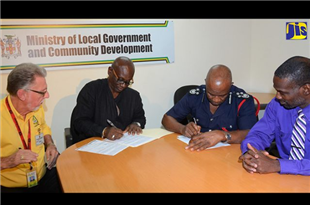
The Government of Jamaica through the Ministry of Local Government and Community Development, has signed a US$987,822 contract with Rosenbauer International for the acquisition of two new trucks for the Jamaica Fire Brigade.

The units, which are slated to be in the island by next year, will be built in Minneapolis, United States, at the facilities of Rosenbauer America.

These trucks, which are known as “pumpers” are specifically designed for Jamaican conditions and the operations of the Jamaican Fire Brigade.

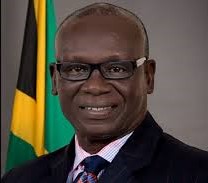
In his remarks, Portfolio Minister Hon. Desmond McKenzie said the trucks will boost the Fire Brigade’s existing fleet.

“The trucks will be pre-ordered, and they do take some time to get here (but) because of the relationship that exists between the local company and the foreign company, we are hoping that we will get them a little bit ahead of schedule,” he said.

Mr. McKenzie noted that the Ministry is committed to the capacity expansion of the Jamaica Fire Brigade, and the acquisition of fire trucks is critical to the honouring of that promise. The Minister added that other improvements will include the commencement of work on one of the three new fire stations that will be constructed in St. James, St. Thomas and St. Mary in this financial year, and the procurement of safety and security gear.

Commissioner of the Jamaica Fire Brigade, Errol Mowatt, stated that the trucks will be deployed based on the needs of each division, when they arrive in the island, and noted that the units will improve the capability of the Jamaica Fire Brigade to better respond to the needs of the citizenry.

Commissioner Mowatt also disclosed that very shortly, a similar contract will be signed for two additional trucks.

Rosenbauer Minnesota, LLC, one of Rosenbauer America’s four production centres, is located in Wyoming. The produces custom, technically demanding fire service trucks.

Local Government Minister Commends Integrated National Effort Against Hurricane Matthew, Expresses Concern For Haiti

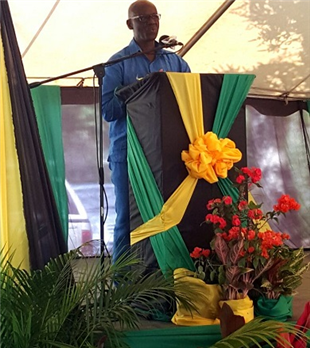
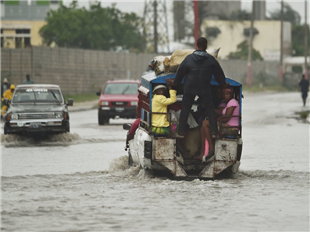
Minister of Local Government and Community Development Desmond McKenzie, has commended all the partner Ministries, Agencies and volunteer organizations that worked tirelessly to ensure Jamaica’s preparedness for Hurricane Matthew.

At a news conference today, the Minister noted that great sacrifices have been made to prepare the country for the weather system, and that the levels of information-sharing and general preparedness were appropriate to the threat that Hurricane Matthew presented to the country.

“As a Government, we are very grateful that Matthew shifted from us and did not hit the country as projected. The Growth Agenda is crucial to this Administration’s plans to improve the lives of Jamaicans, and that was placed in great danger by the threat of the Hurricane. Let me also say that it is never possible to over-prepare for a weather system of this kind.”

The Minister also indicated that the normal processes of damage assessment and related reviews will be done as quickly as possible.

In response to concerns that had been raised about the manner in which allocations had been made for drain cleaning, the Minister made it clear that advances had been made from the Parochial Revenue Fund to Members of Parliament to facilitate this activity, an announcement he had made last Friday, after the initial meetings of the National Emergency Operations Centre.

Minister McKenzie also expressed great concern for the people of Haiti, who have been exposed to the fury of Hurricane Matthew. “We have been spared and we are thankful, but we all know that our brothers and sisters in Haiti can’t take much more in the way of battering from the elements. I am urging everyone who can, to make contributions to assist in the relief effort for Haiti, and I know the Government will also look into this matter.”

Tropical Storm Warning Discontinued For Jamaica

The Meteorological Service has discontinued the Tropical Storm Warning for Jamaica.

The island is no longer at threat of tropical storm-force winds as Hurricane Matthew continues to move away and weather conditions improve.

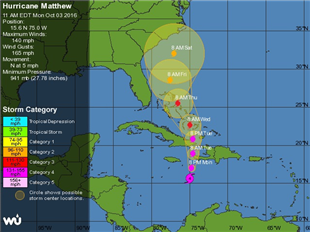
The MET Office says at 10 a.m. the centre of Hurricane Matthew was located near Latitude 18.9 degrees North, Longitude 74.3 degrees West.

This is about 230 kilometres (140 miles) east of Morant Point, Jamaica or 60 kilometres (35 miles) east of Tiburon, Haiti.

Matthew is moving toward the north near 17 km/h (10 mph). On this track, the eye of Matthew will move over the Windward Passage and eastern Cuba today.

A turn toward the north-northwest is expected by Wednesday, followed by a northwest turn Wednesday night.

Maximum sustained winds are near 230 km/h (145 mph), with higher gusts, making Matthew a Category 4 hurricane on the Saffir-Simpson Hurricane Wind Scale.

Some fluctuations in intensity are possible during the next couple of days, but Matthew is expected to remain a powerful hurricane through at least Wednesday night.

The MET Office says although Matthew is no longer considered a threat to Jamaica, the island could continue to experience isolated showers and thunderstorms, especially over eastern parishes. Residents are, therefore, advised to remain on the alert should periodic outbreaks of showers cause localised flooding.

Small craft operators should also continue to exercise caution until wind and sea conditions have returned to safe levels.

Local Government Minister Urges Continued National Vigilance As Hurricane Warning Is Downgraded

Minister of Local Government and Community Development Desmond McKenzie, is warning that Jamaicans must still ensure that every precaution is taken, even the national alert for Hurricane Matthew has been downgraded to a Tropical Storm Warning.

This warning reflects the weather system’s projected path and distance from Jamaica, and not the status of the weather system. Matthew is still a powerful Category Four Hurricane, and at its average speed of 6 miles per hour, it is still projected to deposit heavy rains in Jamaica, a point emphasized by Minister McKenzie.

“We are calling on every citizen to continue to take precautions. To those who have not done so, we are calling on them to start now, to ensure their safety and well-being. We are still very concerned about flooding, and the Agencies of the State are continuing to take all necessary measures to prevent and respond to it. However, it cannot be said too often…please take precautions.”

He gave the assurance that Shelters remain open, that people in need of them will be accommodated, and that partner Ministries and Agencies continue to work to ensure maximum safety and security.

Local Government Minister Warns That Time Is Running Out For People In Vulnerable Areas To Be Evacuated

Minister of Local Government and Community Development, Desmond McKenzie, has again urged that people in vulnerable areas who have insisted on remaining in them, leave immediately.

At the latest news briefing on developments regarding Hurricane Matthew today, Minister McKenzie, who is also Deputy Chairman of the National Disaster Council, warned that the last chance for such persons to leave vulnerable areas is now at hand.

“I have said it before and I will say it again…the Government is not prepared to put the lives of our first responders to disasters at risk, because people are being stubborn, and defying the orders to evacuate. If there are people now saying they are ready to leave, that is a conversation that would have to be had with our responders, including the Jamaica Defence Force. We are prepared to consider the matter one more time, and then it is final.”

Residents of Port Royal are among those in vulnerable areas who have largely refused to leave the town, despite appeals from their Member of Parliament, and the provision of buses by the Jamaica Urban Transit Company, to take them to the National Arena. There are also people on the Pedro Cays who have also defied orders to evacuate.

With regard to shelters, the Minister advised that they are all open. He also stated that the Cabinet has directed that food is to be provided at the shelters from the outset. Traditionally, people who seek access to shelters are advised to take food, personal care products and other sundries to the shelters.

On the subject of drain and gully cleaning in preparation for the Hurricane, the Minister made it clear that while the National Solid Waste Management Authority and the National Works Agency are working assiduously, the practices of many people are undermining their best efforts. “Let me be plain. Even if a billion dollars a day was spent cleaning drains and gullies, it would be a pointless exercise because people keep throwing garbage and solid waste into the gullies. And it is not only people downtown who are guilty of these things. People from all sections of the society are doing them. We need to have a conversation about the civic pride that that has been lost in the country, and how we can get it to return. What I am prepared to say however, is that by next week, I will be going to Cabinet with proposals for the increases in fines for littering.”

National Cleanup Campaign postponed due to threat of Tropical Storm Matthew

The next phase of the National Cleanup Campaign has been postponed until further notice, in view of the potential threat of Tropical Storm Matthew to Jamaica.

Minister of Local Government and Community Development, Hon. Desmond McKenzie, whose Ministry is spearheading the Campaign, noted that all partners in the Campaign have been advised of the latest developments.

“We recently completed a successful exercise in Hanover, and people have responded positively to the sensitization meetings, and also to the call to bring out their bulky waste for collection. The next phase is to be implemented in Trelawny, and our preparations are well advanced, so I am satisfied that our momentum should not be unduly dented by the potential threat of this Tropical Storm.”

In noting that the Government has activated all emergency mechanisms in the event of the weather system coming to Jamaica, Minister McKenzie also urged communities across the country to take preventive measures.

“We have appealed for a greater effort at cleanliness in private and public spaces, to fight against the Zika virus among other things. However, keeping spaces, including all our gullies and other waterways free from garbage and solid waste, is also an effective defensive mechanism against the higher levels of storm water that normally accompany any weather system of this nature.”

The Local Government Minister also gave the assurance that the Ministry, the Office of Disaster Preparedness and Emergency Management (ODPEM) and the Local Authorities are continuing to make appropriate arrangements for the possibility of the storm reaching Jamaica.

MAJOR GOVERNANCE CHANGES COMING FOR LOCAL AUTHORITIES

Minister of Local Government and Community Development, Hon. Desmond McKenzie, has given the assurance that Local Authorities will be strengthened, and not shut down, as has been suggested by some public commentators recently. In contributing to the Sectoral Debate 2016/2017, the Minister said while this is the case, the Ministry will be taking strong measures to restore discipline to the administration of affairs by the Local Authorities, following the revelations in the Special Reports of the Contractor-General, which were tabled in Parliament. “The public is aware of the actions I have taken in relation to the Hanover Parish Council. They are a clear signal…that this Administration, and this Minister, will not stand aside and allow breaches of the public trust to occur, under the banner of “autonomy”. The Local Authorities are accountable to the Minister under law, and I intend to lift the standard of accountability and of service that they are to provide.” The Minister announced that all Local Authorities will be audited, to ensure that appropriate systems are implemented to make them significantly more efficient and accountable. He also stated that a number of mechanisms will be introduced to ensure and preserve better management at the local level. “We have established a Land Divestment Committee, which is responsible for ensuring that the sale or leasing of lands held by the Local Authorities, is conducted in full compliance with existing policies, laws and regulations. We will in short order, be establishing Audit Committees in the Local Authorities, and we will also begin the process of developing Standard Operating Procedures to ensure seamlessness and accountability in the management of their public responsibilities. At the same time, we will be improving institutional capacity in the Local Authorities, by introducing training in Risk-based Auditing. The curriculum has already been developed and beginning this August, the Auditors in the Local Authorities will experience training on a regional basis. This will also facilitate the more robust system of Quarterly Reporting that will be required of the Local Authorities as of this August.” The portfolio Minister made it clear that failure to adhere to existing laws, policies and guidelines will have practical penalties for the Local Authorities. “We …are tying the payment of monies to the Local Authorities, to their strict compliance. In other words, if the laws or rules are broken, a Local Authority will not receive funding.” In stating that there are serious challenges to be overcome in the Local Authorities, Mr. McKenzie revealed that he will be inviting representatives of the political and administrative functionaries to discuss and resolve the issues. “I am publicly inviting the General Secretary of the Jamaica Association of Local Government Officers (JALGO), Mrs. Helene Davis-Whyte, and the President of the Association of Local Government Authorities of Jamaica (ALGAJ) Councillor Scean Barnswell, to meet with the Ministry’s team and myself to discuss the issues, and to resolve them in a spirit of partnership. I will also be seeking audience with the Contractor-General in this regard. Local Government needs good systems, and good people giving good service throughout those systems, to satisfy public needs and raise its public image.”

MAJOR CHANGES COMING FOR LOCAL AUTHORITIES (1)

Message of Monique Barbut Executive Secretary, UNCCD for World Day to Combat Desertification

Protect Earth. Restore Land. Engage People.

Nearly Half Of The Global Population Was Living Below The Poverty Line In 1980. By 2012 That Number Was Down To About 13%. This means more of us today have the freedom to choose how we live: what we eat or drink, how we spend our time and, even, how we earn our incomes. But ours might be the last generation with such a sizeable global population enjoying these freedoms. Why?

The freedoms we enjoy are made possible by the wide array of land resources we draw on to develop, such as fertile soils, fresh water or the plant and animal life in grasslands and forests. But this freedom to choose has come at a very high price: the degradation of more than 2 billion hectares of all the productive land available to humankind. Today, for every three hectares of land that was productive to start with, one hectare is virtually unusable.

Our inclination to degrade new land instead of fixing and re-using the land that is already degraded means future generations cannot benefit from the same resources. What’s more, the greenhouse gases we emit through our choices are changing the weather patterns so dramatically, they are hastening the destruction of the remaining land resources. Droughts, flashfloods, rainy and hot seasons that are unpredictable, more intense, frequent and widespread are stripping the land bare of its resources faster than ever before.

The rights we claim to enjoy these land resources come with a heavy moral obligation to manage them well. More so, as we may be, literally, the last generation that can significantly slow down the accelerated loss of the land resources left. This generation – our generation – has the time, human, knowledge and financial means to reverse these trends, and restore a vast amount of the degraded lands. But we must work together.

Will we rise to the occasion?

Last year, 193 countries pledged to strive to become land degradation neutral by 2030. It means that you and I made the commitment to maintain the amount of productive land available within our borders during the next 15 years and beyond, or better still, to increase it. If one hectare of land is degraded, we would strive to restore back to health an equal amount of some degraded land.

Ninety countries have already signed up to the challenge and are setting their national targets. This is admirable. But it is not enough when at least 169 countries are affected by land degradation or drought, and all countries are indirectly impacted by them. Actions to avoid, halt and reverse land degradation must begin now with everyone fully engaged. The prospect of a land degradation neutral world grows dimmer if we procrastinate. But it shines brighter each time a person or country joins the campaign to restore degraded land or the battle against the degradation of new land.

Land degradation neutrality should be a top policy goal for every nation that values freedom and choice. Conserving land and restoring that which is degraded back to health is not a benefit that only flows to the billions of people who eke out a living directly from the land. It is a vote to safeguard our own freedoms of choice, and those of our children. It is also a moral standard against which we may well be judged by history.

2016_World Day Message_Monique Barbut


The Secretary-General Message on World Day To Combat Desertification And Drought M

“Protect Earth. Restore land. Engage people”

Desertification, land degradation, drought and climate change are interconnected.  As a result of land degradation and climate change, the severity and frequency of droughts have been increasing, along with floods and extreme temperatures.  More than 50 per cent of agricultural land is moderately or severely degraded, with 12 million hectares lost to production each year.

The livelihoods and well-being of hundreds of millions of people are at stake.  Nearly 800 million people are chronically undernourished as a direct consequence of land degradation, declining soil fertility, unsustainable water use, drought and biodiversity loss.  Over the next 25 years, land degradation could reduce global food productivity by as much as 12 per cent, leading to a 30 per cent increase in world food prices.

Without a long-term solution, desertification and land degradation will not only affect food supply but lead to increased migration and threaten the stability of many nations and regions.  This is why world leaders made land degradation neutrality one of the targets of the Sustainable Development Goals.  That means rehabilitating at least 12 million hectares of degraded land a year.

One important approach is sustainable, climate-smart agriculture.  This will not only help communities to build resilience to climate change, it will also support mitigation by taking carbon from the atmosphere and putting it back in the soil.  The transition to sustainable agriculture will also alleviate poverty and generate employment, especially among the world’s poorest.  By 2050, it could create some 200 million jobs across the entire food production system.

Our theme for this year’s World Day to Combat Desertification is: “Protect Earth. Restore land. Engage people.”  On this Day, I urge cooperation among all actors to help achieve land degradation neutrality as part of a broader effort to achieve the Sustainable Development Goals and build a future of dignity and opportunity for all.

Please see the link to below to download the Message

SGMessage17 Desertification2016 

World Day to Combat Desertification and Drought

Desertification, along with climate change and the loss of biodiversity, were identified as the greatest challenges to sustainable development during the 1992 Rio Earth Summit. Established in 1994, UNCCD is the sole legally binding international agreement linking environment and development to sustainable land management. The Convention addresses specifically the arid, semi-arid and dry sub-humid areas, known as the drylands, where some of the most vulnerable ecosystems and peoples can be found. In the 10-Year Strategy of the UNCCD (2008-2018) that was adopted in 2007, Parties to the Convention further specified their goals: “to forge a global partnership to reverse and prevent desertification/land degradation and to mitigate the effects of drought in affected areas in order to support poverty reduction and environmental sustainability”.

The Convention’s 195 parties work together to improve the living conditions for people in drylands, to maintain and restore land and soil productivity, and to mitigate the effects of drought. The UNCCD is particularly committed to a bottom-up approach, encouraging the participation of local people in combating desertification and land degradation. The UNCCD secretariat facilitates cooperation between developed and developing countries, particularly around knowledge and technology transfer for sustainable land management.

As the dynamics of land, climate and biodiversity are intimately connected, the UNCCD collaborates closely with the other two Rio Conventions; the Convention on Biological Diversity (CBD) and the United Nations Framework Convention on Climate Change (UNFCCC), to meet these complex challenges with an integrated approach and the best possible use of natural resources.

This year’s theme: Inclusive cooperation for achieving Land Degradation Neutrality to be celebrated on June 17, 2016.

Source: www.unccd.int